
Last but by no means least, the earlier titles benefit from a new 16:9 ratio and liberal use of bloom; it’s a testament to the quality of the seven-year-old Prime graphics engine that it needs such little work to stand up today. Rarely has there been such a strong advert for amazing art direction overcoming hardware deficiencies. Samus Aran’s adventure is filled with details and effects that really bring the world to life: whether it be the dense foliage of the Tallon Overworld or the icy plains of Phendrana Drifts, every location is dripping with atmosphere.
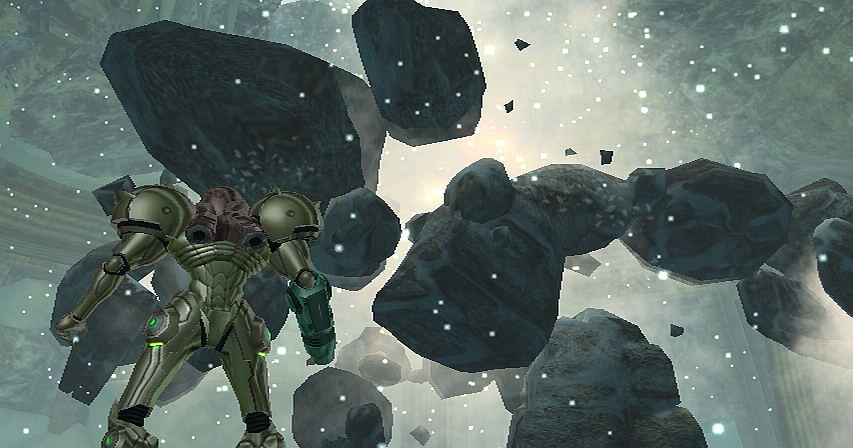
It's not all a beautiful voyage of discovery. Sometimes people need to be blown to pieces too.
There are a few minor differences that only the most observant of pedants will notice; minute details such as the heat blur caused by Samus’ arm cannon overheating are missing. They don’t affect the experience in any meaningful way but their absence is a little bizarre.
The original Prime is still the high water-mark for the series, with near-perfect pacing, the greatest variety of locations and the most gripping story. Perhaps even more so than Super Mario 64 and Ocarina of Time, the game is a perfect example of how to make the jump from 2D to 3D, with Samus’ grapple beam, morph ball and visors allowing for incredibly effective use of the 3D environment.





 Satoru Iwata Video Interview - the late Nintendo president spoke with Kikizo in 2004 as 'Nintendo Revolution' loomed.
 Kaz Hirai Video Interview - the first of Kikizo's interviews with the man who went on to become global head of Sony.
 Ed Fries Video Interview - one of Xbox's founders discusses an epic journey from Excel to Xbox.
 Yu Suzuki, the Kikizo Interview - we spend time with one of gaming's most revered creators.
 Tetris - The Making of an Icon: Alexey Pajitnov and Henk Rogers reveal the fascinating story behind Tetris
 Rare founders, Chris and Tim Stamper - their only interview? Genuinely 'rare' sit down with founders of the legendary studio.
 The History of First-Person Shooters - a retrospective, from Maze War to Modern Warfare