|
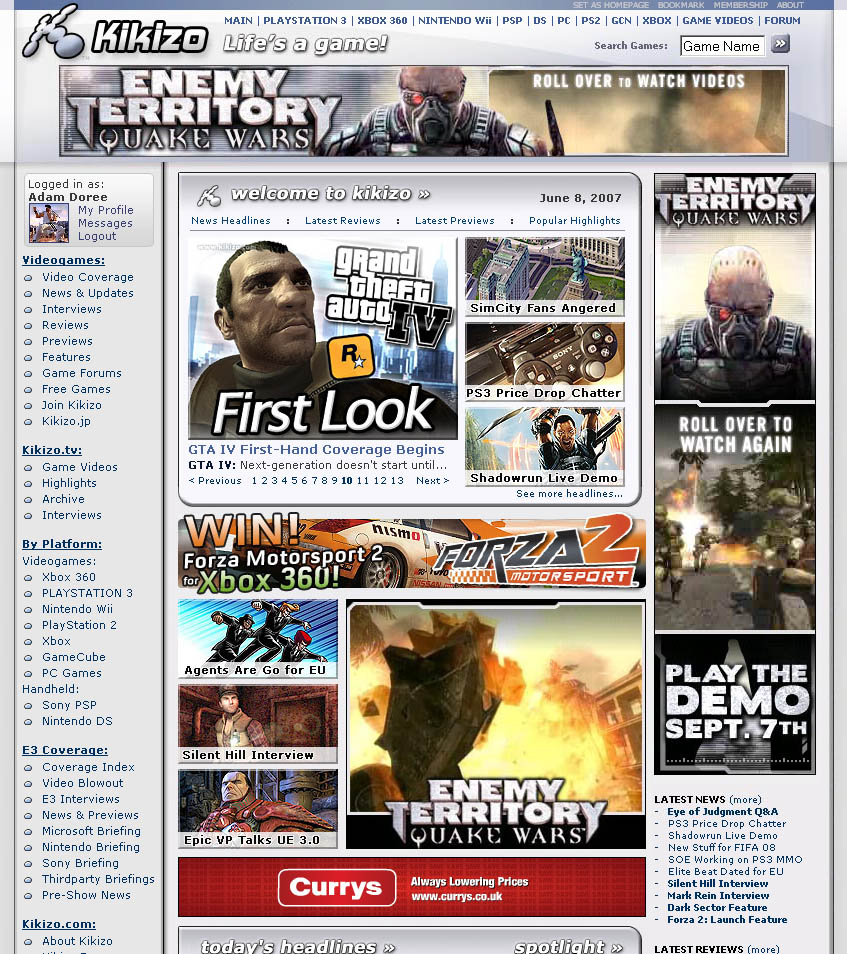
Credits/Contact With thanks to everyone who's supported us over the years!
Kikizo is proud to have featured the work of many great editors and contributors, including many whose careers started out on Kikizo:
Edwin Evans-Thirlwell (Official Xbox Magazine), Alex Wollenschlaeger (Meta), Joseph Jackson, Andy Robinson (CVG, VGC), Stuart McAndrew, Carl Johnson, Hasan Ali Almaci, Heidi Kemps and Steve Boxer, Will Federman, Rupert Higham, Ian Dransfield (PLAY Magazine), Kristan Reed (Pocket Gamer), Dominick Hardy (GameLoft), Mike Jackson (CVG), Andrew Alfonso (IGN), Keza MacDonald (Eurogamer / IGN), Daniel Boutros (Adept Games), Stephen Rowley (Jagex), Will Freeman (Develop), Nate Ahearn (IGN), Gavin Frankle (IGN), Neil McPhillips (Midway), Alan Boiston (VVV Gamer), Toby Pestridge, Dylann Bobei, Haig Chapman, Thomas Dar, Richard Smeeton, James Hamblin, Joel Goodbody, Manny Brown, Richie Walker, Chris Schilling (Eurogamer), Brent Selvog, Jonti Davies, Joe Grace, Daniel Markiewicz, Daniella Lucas, Ben Dutka, Kurokawa Misaki, Rick Larson, Nathan Einhorn, Justin Speer, Tony Scinta, Mike Knowlan, Jamie Thomson, Roy Martin, Ryan Berg, Matt Thomas, Joe Ten Brook, Rico Rodriguez, John Gold, Piaras Kelly, Colin Wilson, Gareth Stack and Adam Maguire. Special thanks: Imran Ramzan, Sharan Jain, and Bob and Pam Handshy who ran the best ever mom'n'pop hosting company out of Spokane, WA back in the day.
Managing Director/Publisher: Adam Doree [Contact via LinkedIn]
General Email: forklift@kikizo.com
|